Metric System in the U.S.: The Yard Is Defined by the Meter
The Yardstick Almanac Published No substantive revisions
Short answer
Since 1893 the U.S. yard and pound have been defined from the meter and kilogram, and since 1959 by exact values: 1 yard is 0.9144 m, 1 pound 0.45359237 kg.
Station index 4 sections
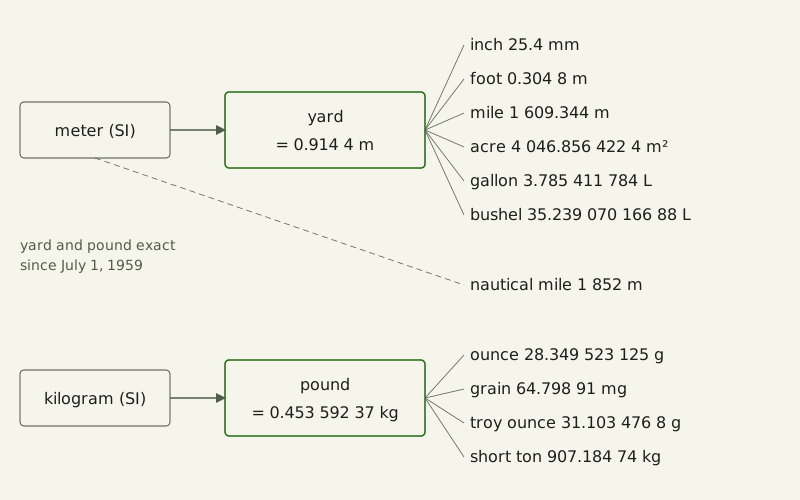
Figure: The Yardstick Almanac, CC BY 4.0
Credit line to copy
"How U.S. customary units hang on the meter and kilogram" by The Yardstick Almanac, https://theyardstickalmanac.com/units/metric-system-united-states/, licensed under CC BY 4.0 (https://creativecommons.org/licenses/by/4.0/).
Data: Computed from 24 FR 5348 (1959) and NIST Handbook 44 (2026), Appendix C, 2026-11-01, CC BY 4.0
Since 1893 the U.S. yard has been defined from the meter, not from a British bar. The first definition, 1 yard = 3600/3937 meter [exact by definition], came that year from T. C. Mendenhall, superintendent of weights and measures, who announced, with the Treasury Secretary's approval, that the international meter and kilogram would be the nation's fundamental standards. His order added that “the practical effect upon our customary weights and measures is, of course, nothing.” In 1959 the yard was set at 0.9144 meter, 2 parts per million shorter [exact by definition]; that cut is the rounding remainder this page follows, our name for what a measurement convention leaves over.
In law, the United States is partly metric. Metric units have been lawful nationwide since an act of July 28, 1866. Since 1988, federal law has called the metric system “the preferred system of weights and measures for United States trade and commerce.”
Customary units are built on it. A Federal Register notice set 1 yard at 0.9144 meter [exact by definition] and 1 pound at 0.45359237 kilogram [exact by definition] from July 1, 1959 (24 FR 5348). Every other customary length, area, volume and mass follows from those two numbers, with one exception. The nautical mile is defined directly as 1852 meters.
Is the United States officially metric?
The metric system is lawful, preferred and defined in U.S. law, and federal agencies are told to use it where that is economically feasible. A separate labeling law, 15 U.S.C. §1453, also requires packaged consumer goods to state net contents in metric units alongside customary ones, with exceptions such as food packed at the retail store. The 1866 act survives as 15 U.S.C. §204, which reads “It shall be lawful throughout the United States of America to employ the weights and measures of the metric system.” It also says no contract, dealing or court pleading is invalid because it uses metric units.
Its second section once carried a table of equivalents, with the meter at 39.37 inches. In 2007 Congress replaced that table. Section 205 now defines the metric system as “the International System of Units as established in 1960, and subsequently maintained, by the General Conference of Weights and Measures, and as interpreted or modified for the United States by the Secretary of Commerce.”
The two laws in between set policy without forcing private users. The Metric Conversion Act of 1975 declared a policy to coordinate “the voluntary conversion to the metric system” and created a U.S. Metric Board that “shall have no compulsory powers.”
The 1988 trade act rewrote that policy. It made metric the preferred system for trade and commerce. It also told federal agencies to use it in procurement, grants and other business activities by the end of fiscal year 1992, to the extent economically feasible. Yet it chose “to permit the continued use of traditional systems of weights and measures in non-business activities.”
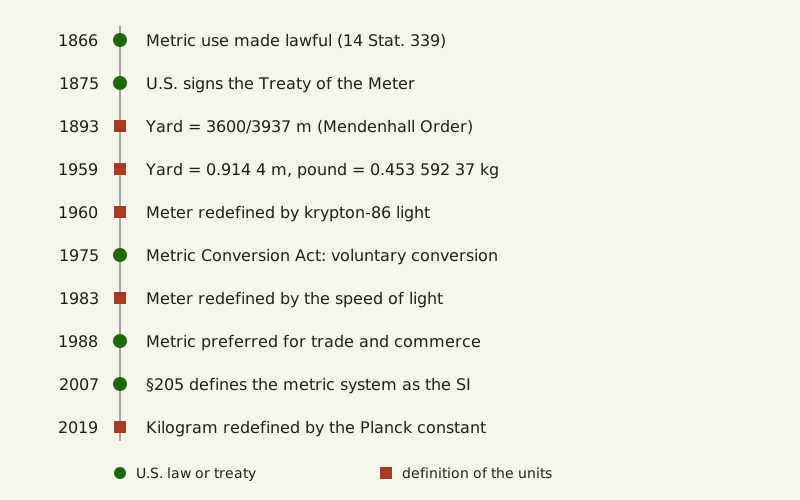
Figure: The Yardstick Almanac, CC BY 4.0
Credit line to copy
"The metric system in U.S. law and in the unit definitions, 1866–2019" by The Yardstick Almanac, https://theyardstickalmanac.com/units/metric-system-united-states/, licensed under CC BY 4.0 (https://creativecommons.org/licenses/by/4.0/).
Data: U.S. Code (2024 edition), Pub. L. 94-168, 24 FR 5348, NBS SP 447, and the SI Brochure, 9th edition, version 4.01, by the BIPM, CC BY 4.0 (adapted: drawn as a timeline); 2026-11-01
| Year | Document | What it did |
|---|---|---|
| 1866 | Act of July 28, 1866 (14 Stat. 339) | Made metric units lawful nationwide |
| 1875 | Treaty of the Meter | The U.S. was an original signatory |
| 1893 | Mendenhall Order | Derived the yard and pound from the international meter and kilogram |
| 1959 | 24 FR 5348 | Set the yard at 0.9144 m and the pound at 0.45359237 kg |
| 1960 | 11th CGPM, Resolution 6 | Defined the meter by a krypton-86 wavelength |
| 1975 | Pub. L. 94-168 | Declared a policy of voluntary conversion |
| 1983 | 17th CGPM, Resolution 1 | Defined the meter by the speed of light |
| 1988 | Pub. L. 100-418, §5164 | Made metric the preferred system for trade and commerce |
| 2007 | Pub. L. 110-69, §3013 | Defined the metric system in §205 as the SI |
| 2019 | 26th CGPM (2018), Resolution 1 | Defined the kilogram by the Planck constant |
Position: the U.S. has run on metric definitions since 1893; the labels just never changed. That is a claim about definitions, not a call for a law that forces metric labels, and this page gives no advice on labeling or legal metrology.
The case against it rests on use. In 1975 Congress found the country “the only industrially developed nation which has not established a national policy of committing itself and taking steps to facilitate conversion to the metric system.” NIST Handbook 44 still states the aim of making the SI “the primary measurement system used in the United States,” which describes a goal, not a finished change.
How did the yard come to hang on the meter?
By an administrative order, not a new law. Mendenhall's 1893 order gave two reasons. The country had no proper material standards for its customary units, and the new international prototypes promised “greater stability in weights and measures, as well as much higher accuracy in their comparison.”
A note in the order turned the 1866 figure of 39.37 inches to the meter into 1 yard = 3600/3937 meter [exact by definition]. From then on, the U.S. and British yards were no longer kept equal. NBS Special Publication 447 puts the largest gap between them before 1959 “in the order of 0.000 13 inch” [measured, source gives no uncertainty], with the U.S. yard the longer.
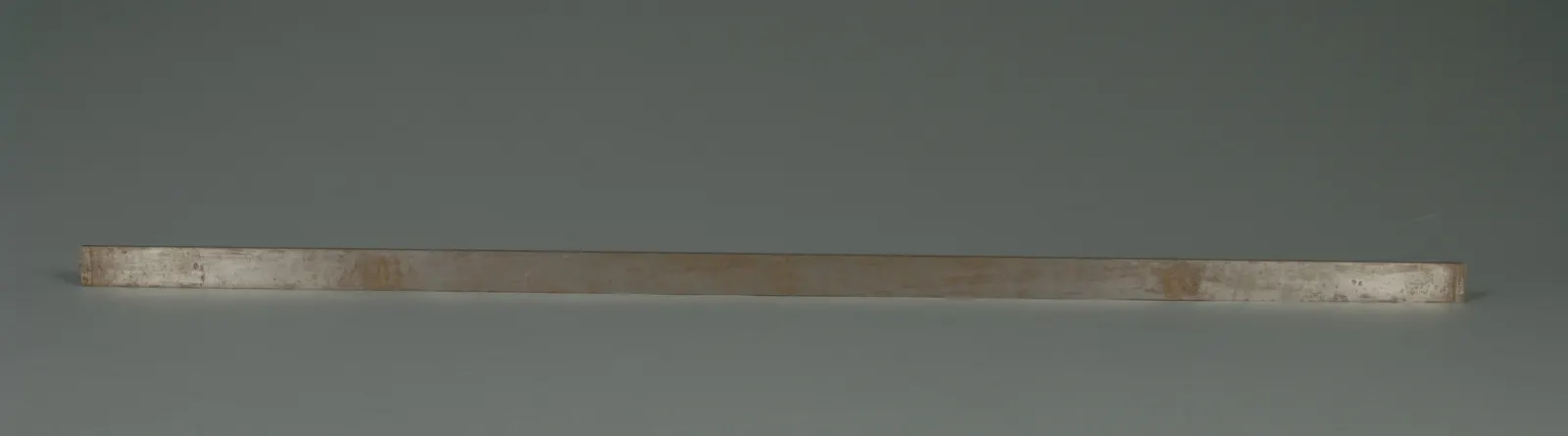
"Committee Meter Bar, made of platinum in 1799 (NIST Museum Collection)" by NIST Museum Collection, public domain
Full credit
"Committee Meter Bar, made of platinum in 1799 (NIST Museum Collection)" by NIST Museum Collection — https://commons.wikimedia.org/wiki/File:Committee_Meter_Bar_Platinum_1799.png — Public domain (work of the U.S. federal government, 17 U.S.C. §105 (photograph from the NIST Museum Collection, source https://www.nist.gov/image/committee-meter); Commons also marks the file with the Public Domain Mark 1.0)
The 1959 change was a rounding. The National Bureau of Standards and the Coast and Geodetic Survey announced exact equivalents of 0.9144 meter for the yard and 0.45359237 kilogram for the pound, the same values the standards laboratories of five other countries would use.
The new yard was smaller “by 2 parts in one million,” so the inch became 25.4 millimeters [exact by definition] instead of about 25.400051 mm. The notice said the change would have “no effect at all upon ordinary trade and commerce.” Geodetic surveys kept the 1893 ratio. That kept a second foot in use until 2023.
What happened to the yard when the meter changed?
Nothing you could see, because the yard is a fixed fraction of whatever the meter is. The 1959 notice says all customary calibrations by the National Bureau of Standards “will continue to be based upon metric measurement standards.”
In 1960 the 11th General Conference on Weights and Measures defined the meter as 1 650 763.73 wavelengths of a krypton-86 line [exact by definition] and abrogated the 1889 definition based on a platinum-iridium bar. A bureau bulletin of that year, quoted in SP 447, said the change would not alter “in any way the relation between the English and Metric units.” It gave the inch as 41,929.399 wavelengths of the krypton light. We checked that figure with exact fractions: 0.0254 times 1 650 763.73 is 41,929.398742 [exact by definition], which rounds to the bulletin's 41,929.399.
The 17th General Conference redefined the meter in 1983 as the length of the path light travels in vacuum in 1/299 792 458 of a second. The yard stayed 0.9144 of that meter. The pound followed the same path after the 2019 kilogram redefinition tied the kilogram to a fixed value of the Planck constant. The pound is still 0.45359237 kilogram, now of the new kilogram.
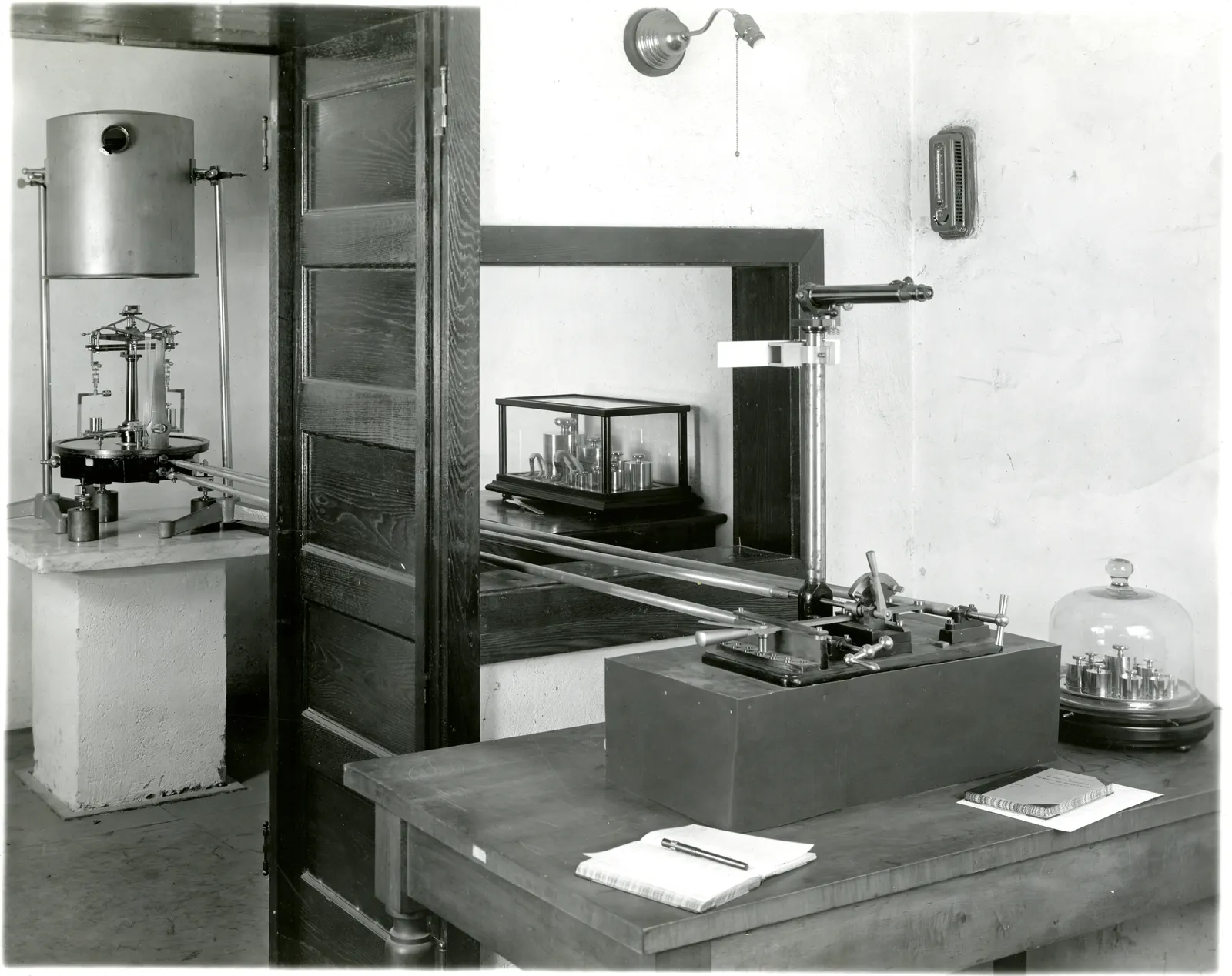
"Mass standards balance operable from the adjoining room (NIST, Commons file MassStandards 001)" by National Institute of Standards and Technology, public domain
Full credit
"Mass standards balance operable from the adjoining room (NIST, Commons file MassStandards 001)" by National Institute of Standards and Technology — https://commons.wikimedia.org/wiki/File:MassStandards_001.jpg — Public domain (work of the U.S. federal government, 17 U.S.C. §105 (Commons tag: work of an employee of the National Institute of Standards and Technology))
Which U.S. units have exact metric values?
All of the units below do. Each value comes from one of three numbers: 0.9144 m for the yard, 0.45359237 kg for the pound, or 1852 m for the nautical mile.
We computed every value from those definitions with exact fractions and checked it with a second unit library. We also matched it digit by digit to the decimals printed in NIST Handbook 44 (2026), Appendix C. The handbook rounds two of them, the liquid quart and the fluid ounce; the exact values are given here. Every value in the table is [exact by definition].
| Unit | Customary definition | Exact metric value | Exact since |
|---|---|---|---|
| inch | 1/36 yard | 25.4 mm | 1959 |
| foot | 12 inches | 0.3048 m | 1959 |
| yard | 3 feet | 0.9144 m | 1959 |
| mile | 5,280 feet | 1609.344 m | 1959 |
| rod | 16.5 feet | 5.0292 m | 2023 |
| chain | 66 feet | 20.1168 m | 2023 |
| furlong | 660 feet | 201.168 m | 2023 |
| league | 3 miles | 4828.032 m | 2023 |
| fathom | 6 feet | 1.8288 m | 2023 |
| nautical mile | 1852 meters | 1852 m | 1954 |
| square foot | 144 square inches | 0.09290304 m2 | 1959 |
| acre | 43,560 square feet | 4046.8564224 m2 | 2023 |
| cubic inch | 1 inch cubed | 16.387064 cm3 | 1959 |
| gallon (U.S. liquid) | 231 cubic inches | 3.785411784 L | 1959 |
| quart (U.S. liquid) | 57.75 cubic inches | 0.946352946 L | 1959 |
| fluid ounce (U.S.) | 1/128 gallon | 29.5735295625 mL | 1959 |
| bushel (U.S.) | 2150.42 cubic inches | 35.23907016688 L | 1959 |
| pound (avoirdupois) | 7,000 grains | 0.45359237 kg | 1959 |
| ounce (avoirdupois) | 437.5 grains | 28.349523125 g | 1959 |
| grain | 1/7,000 pound | 64.79891 mg | 1959 |
| troy ounce | 480 grains | 31.1034768 g | 1959 |
| short ton | 2,000 pounds | 907.18474 kg | 1959 |
Each value is a short chain of steps from the yard, the pound or the meter:
- Divide the yard, 0.9144 m, by 36: the inch is 25.4 mm. Cube it and multiply by 231: the U.S. gallon is 3 785.411784 cm3.
- Divide the pound, 0.45359237 kg, by 7,000: the grain is 64.79891 mg, a division the 1959 notice says comes out exact. Multiply by 480: the troy ounce is 31.1034768 g.
- Multiply the 1960 meter, 1 650 763.73 krypton wavelengths, by 0.0254: the inch is 41,929.398742 wavelengths.
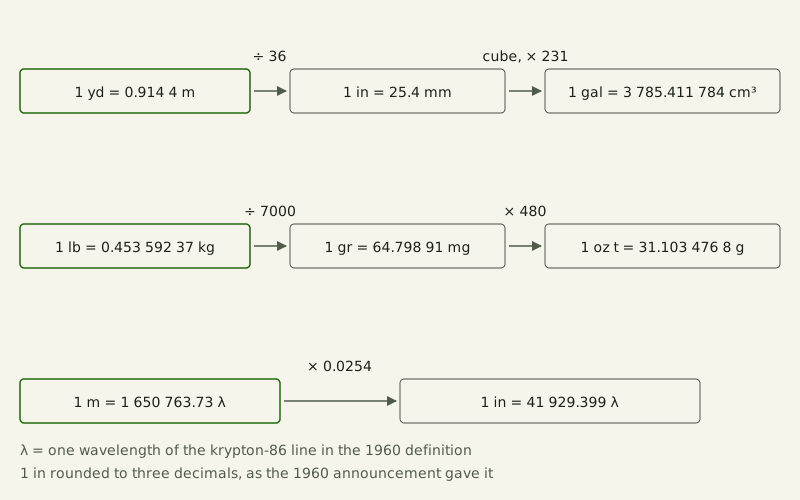
Figure: The Yardstick Almanac, CC BY 4.0
Credit line to copy
"From a metric definition to a customary unit in three steps" by The Yardstick Almanac, https://theyardstickalmanac.com/units/metric-system-united-states/, licensed under CC BY 4.0 (https://creativecommons.org/licenses/by/4.0/).
Data: Computed from 24 FR 5348 (1959), NIST Handbook 44 (2026), NBS SP 447 and the 1960 meter definition in the SI Brochure (BIPM, CC BY 4.0), 2026-11-01
The inch of 25.4 mm was not new in 1959: the notice records that the American Standards Association had approved it for industrial use in 1933. The U.S. gallon of 231 cubic inches is not the British one; Handbook 44 says the Imperial gallon is about 20 percent larger. The handbook also notes that the rod, chain, furlong, league, fathom and acre were defined only with the U.S. survey foot until the end of 2022. The international nautical mile, 1852 m [exact by definition], took effect in the United States on July 1, 1954, by directives of the Commerce and Defense departments; the full story is in the nautical mile.
Sources
- 15 U.S.C. §204, "Metric system authorized" (R.S. §3569, from the Act of July 28, 1866, ch. 301, §1, 14 Stat. 339), and 15 U.S.C. §205, "Metric system defined" (R.S. §3570, as amended by Pub. L. 110-69, title III, §3013(c)(1), Aug. 9, 2007, 121 Stat. 598), United States Code, 2024 edition, Title 15, chapter 6, subchapter I. https://www.govinfo.gov/content/pkg/USCODE-2024-title15/html/USCODE-2024-title15-chap6-subchapI.htm Read: full text of §§204–205 with their notes (2024 edition; the 2023 edition reads the same)
- 15 U.S.C. §§205a–205d, Metric Conversion Act of 1975 (Pub. L. 94-168) as amended by the Omnibus Trade and Competitiveness Act of 1988, Pub. L. 100-418, title V, §5164, Aug. 23, 1988, 102 Stat. 1451–1452, United States Code, 2024 edition, Title 15, chapter 6, subchapter II. https://www.govinfo.gov/content/pkg/USCODE-2024-title15/html/USCODE-2024-title15-chap6-subchapII.htm Read: §§205a–205d with their notes (2024 edition); the 1988 amendments read as codified here, not in the printed Statutes at Large
- 15 U.S.C. §1453, "Requirements of labeling; placement, form, and contents of statement of quantity; supplemental statement of quantity" (Fair Packaging and Labeling Act, Pub. L. 89-755, §4, as amended by Pub. L. 102-329, §§1, 3, Aug. 3, 1992, 106 Stat. 847, 848), United States Code, 2024 edition, Title 15, chapter 39. https://www.govinfo.gov/content/pkg/USCODE-2024-title15/html/USCODE-2024-title15-chap39-sec1453.htm Read: full text of §1453 with its notes (2024 edition)
- Metric Conversion Act of 1975, Pub. L. 94-168, 89 Stat. 1007–1011 (Dec. 23, 1975). https://www.govinfo.gov/content/pkg/STATUTE-89/pdf/STATUTE-89-Pg1007.pdf Read: full act
- America COMPETES Act, Pub. L. 110-69, title III, §3013(c)(1), Aug. 9, 2007, 121 Stat. 572, 598. https://www.govinfo.gov/content/pkg/PLAW-110publ69/pdf/PLAW-110publ69.pdf Read: section 3013
- National Bureau of Standards and U.S. Coast and Geodetic Survey, "Refinement of Values for the Yard and the Pound," Federal Register 24, no. 128 (July 1, 1959), 5348–5349 (24 FR 5348), F.R. Doc. 59-5442. https://www.govinfo.gov/content/pkg/FR-1959-07-01/pdf/FR-1959-07-01.pdf Read: full notice
- Lewis V. Judson, Weights and Measures Standards of the United States, A Brief History, NBS Special Publication 447 (National Bureau of Standards, 1963, updated 1976), sections 6–7, Appendix 3, "The Mendenhall Order of April 5, 1893," and Appendix 6, "Adoption of the Wavelength Definition of the Meter." https://nvlpubs.nist.gov/nistpubs/Legacy/SP/nbsspecialpublication447.pdf Read: sections 6–7, Appendix 3 (full text of the Mendenhall Order) and Appendix 6
- National Institute of Standards and Technology, NIST Handbook 44 (2026 edition), Appendix C, "General Tables of Units of Measurement," sections 2–5 and notes 3, 4, 5 and 21, DOI 10.6028/NIST.HB.44-2026. https://www.nist.gov/document/2026-nist-handbook-44-appendix-c Read: Appendix C, sections 2–5 and their notes
- Bureau International des Poids et Mesures, The International System of Units (SI), 9th edition (2019), version 4.01, DOI 10.59161/AUEZ1291. Section 2.3.1 (the metre); Appendix 1: 11th CGPM (1960) Resolution 6, 17th CGPM (1983) Resolution 1, 26th CGPM (2018) Resolution 1. https://www.bipm.org/documents/20126/41483022/SI-Brochure-9-EN.pdf Read: section 2.3.1 and the three resolutions in Appendix 1 Text license: CC BY 4.0
Data files (computed 2026-11-01 with exact fractions from 1 yard = 0.9144 m and 1 pound = 0.45359237 kg, cross-checked against the Pint 0.26.2 unit library, BSD-3-Clause license, and against the decimals printed in NIST Handbook 44 Appendix C; each file comes with a notes file giving its sources and license):
- U.S. customary units with exact metric values (CSV, source and license notes) Data: Computed from 24 FR 5348 (1959) and the customary relations in NIST Handbook 44 (2026), Appendix C; checked against the decimals printed there, 2026-11-01, CC BY 4.0
- The metric system in U.S. law and in the unit definitions, 1866–2019 (CSV, source and license notes) Data: Summarized from the U.S. Code (2024 edition), Pub. L. 94-168, 24 FR 5348, NBS SP 447, and the SI Brochure, 9th edition, version 4.01, by the BIPM, CC BY 4.0 (adapted: summarized one document per row); 2026-11-01
Cite this page
The Yardstick Almanac. "Metric System in the U.S.: The Yard Is Defined by the Meter." Published November 1, 2026. https://theyardstickalmanac.com/units/metric-system-united-states/. Accessed [the date you read it].
More in Units & Standards
Units & Standards
U.S. Survey Foot: America Had Two Official Feet Until 2023
Image credit
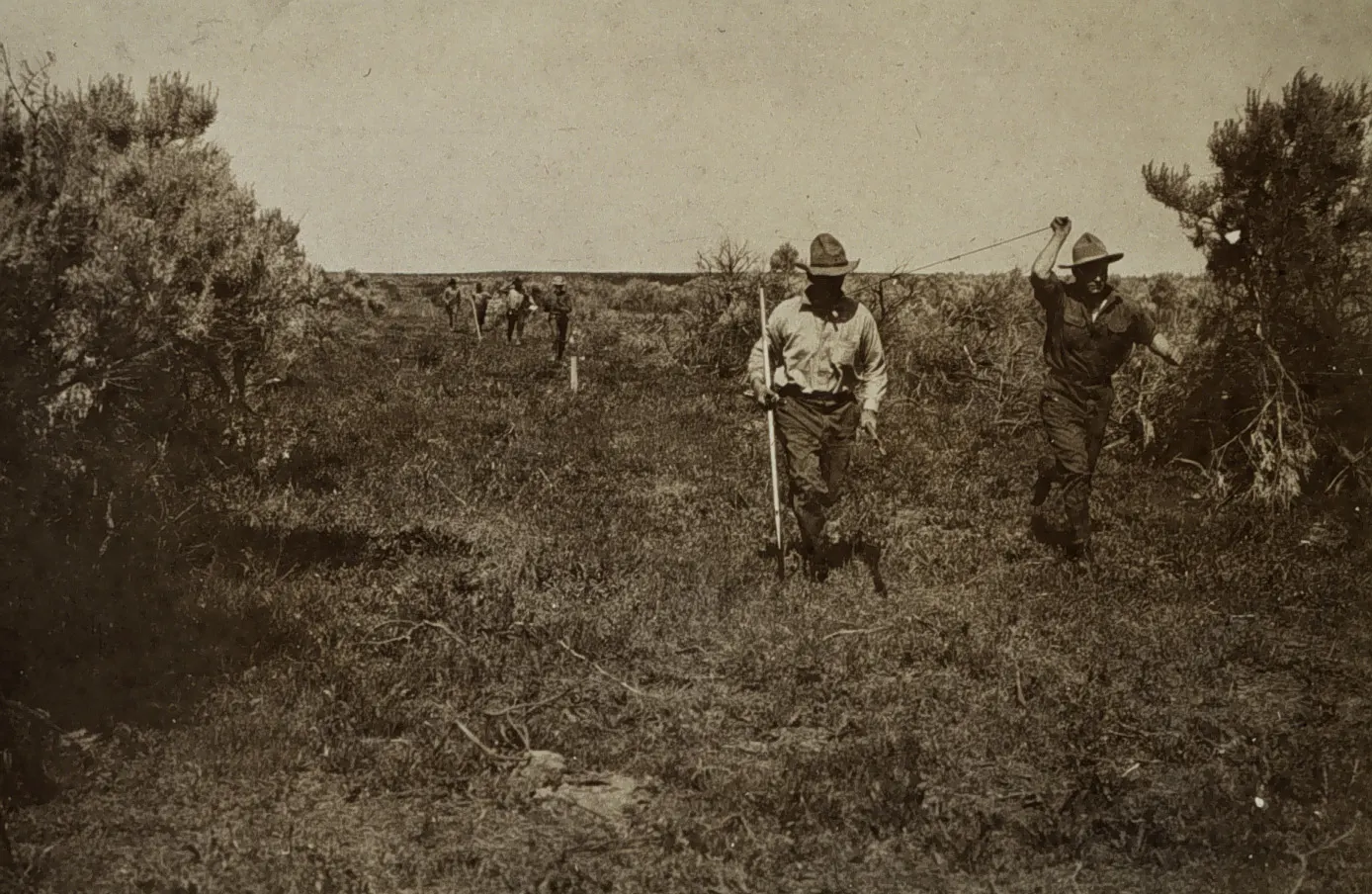
"Measuring base with Invar tape, Stanfield, Oregon (NOAA Photo Library theb1656)" by U.S. Coast and Geodetic Survey — https://commons.wikimedia.org/wiki/File:Theb1656_-_Flickr_-_NOAA_Photo_Library.jpg — Public domain (work of the U.S. federal government, 17 U.S.C. §105; also released by the NOAA Photo Library under CC BY 2.0)
Units & Standards
Kilogram Definition: Why the 1889 Cylinder Has Uncertainty
Image credit
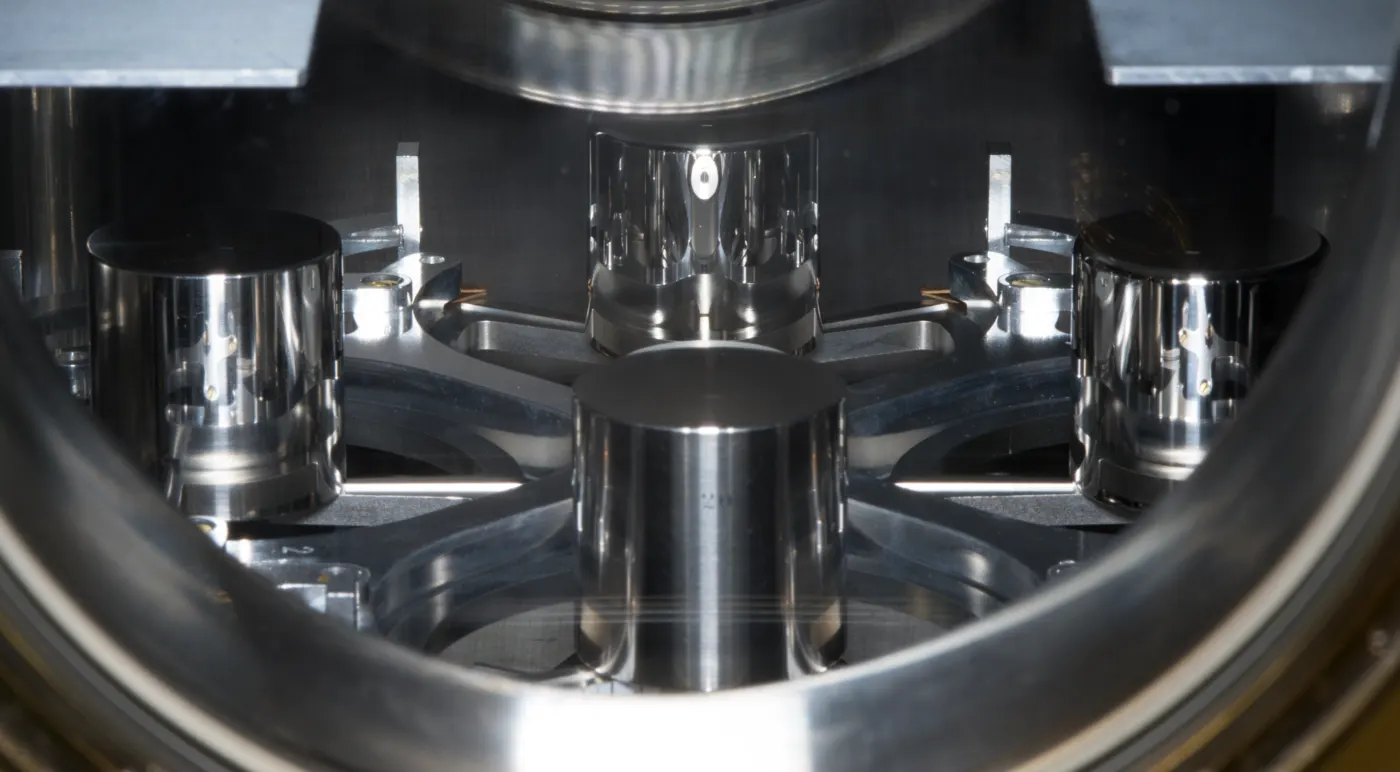
"K20 and Friends: four of the five U.S. national prototype kilogram artifacts, including K20 (front) and K4 (back)" by J. Lee/NIST — https://commons.wikimedia.org/wiki/File:Kilograms-pml0013_K20_and_Friends_Four_of_the_five_U.S._national_prototype_kilogram_artifacts,_including_K20_(front)_and_K4_(back).png — Public domain (work of the U.S. federal government, 17 U.S.C. §105 (photograph by J. Lee of NIST, published by NIST in 2018); Commons also marks the file with the Public Domain Mark 1.0)
Units & Standards
Nautical Mile: 1,852 m, While a Minute of Latitude Varies
Image credit
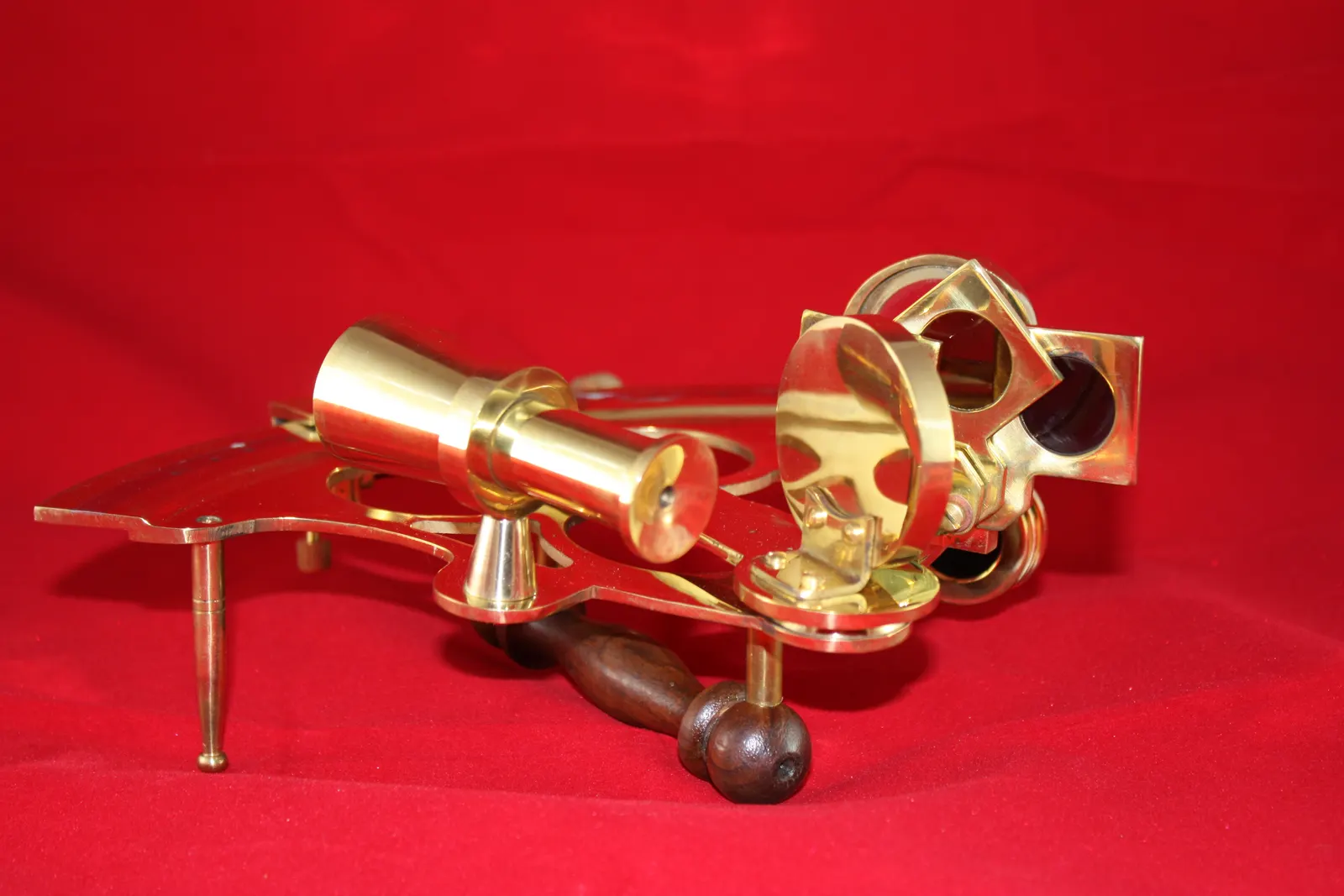
"Sextant (NPS Photo, Lewis and Clark National Historical Park)" by NPS Photo — https://commons.wikimedia.org/wiki/File:This_instrument_was_used_to_measure_the_angular_distance_between_the_moon_and_sun_or_a_star_for_determining_longitude._(1d68d331-1dd8-b71b-0bf5-2e79f90f1e7b).JPG — Public domain (work of the U.S. federal government, 17 U.S.C. §105 (Commons tag PD-USGov-NPS: material based on a work of a National Park Service employee created as part of official duties; photographer field NPS Photo, publisher U.S. National Park Service, source NPGallery); structured data: public domain in the United States, work of the federal government)
How this page is checked: Where the numbers come from explains the value tags, the source order and how every figure is recomputed.
Corrections: every substantive change is logged in What we got wrong.
Spotted an error? Email contact@theyardstickalmanac.com with the sentence and your source, or read Write in first.